 Skip to content
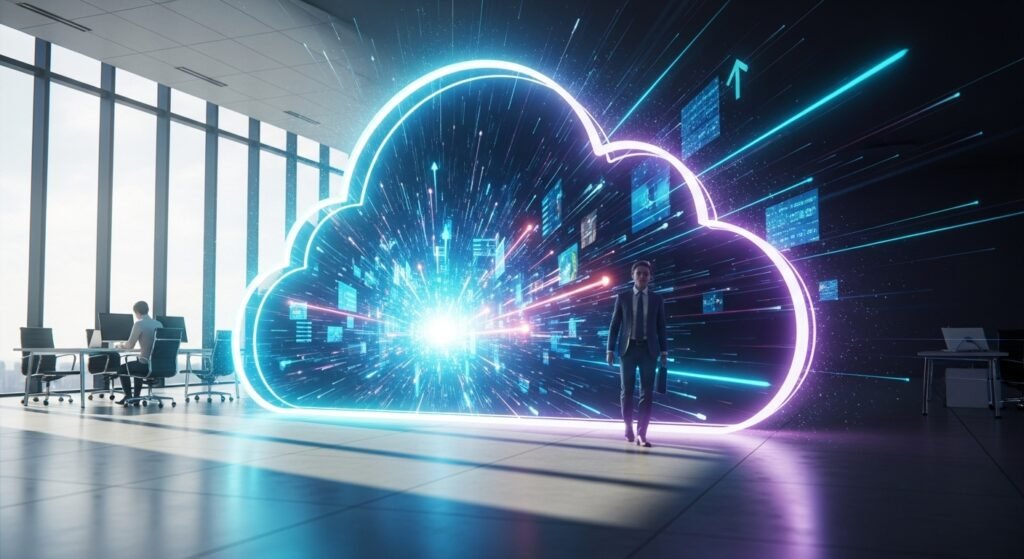
Cloud computing essentials are a total game-changer for folks running businesses today. You don’t need to be a tech wizard to see how it helps. It is basically a digital-first utility that lets you do more with less. You get to move away from old, clunky office servers and use the internet instead. This shift means you can stay fast and competitive without breaking the bank.
The main point of cloud computing essentials is to keep things simple and smooth. It offers your business a chance to scale up fast whenever you need to. You get better security and your team can work from anywhere with a signal. It is all about giving you the power to grow without the headache of fixing hardware. This guide will show you why the cloud is the way to go.
Introduction to Cloud Computing Essentials
Cloud computing essentials are the foundation of any modern company looking to win. Think of it like a utility, just like your water or electricity bill. You use what you need and pay for exactly that amount. This is way different from the old days of buying giant servers. Back then, you had to guess how much space you might need years later.
Now, the shift to the cloud means you use internet-based services for everything. You can store your files, run your apps, and manage data online. This change helps your business stay light and ready for anything. It is a big reason why startups can now take on huge corporations. Staying competitive means adopting these digital tools right now.
- Scalability lets you grow your tech as fast as your sales.
- Streamlined operations keep your team focused on real work.
- Enhanced security protects your secrets from the bad guys.
- On-demand resources mean you never run out of digital space.
Understanding the Fundamental Cloud Models
The cloud is basically about renting instead of owning physical gear. Why buy a whole building when you just need a desk? This logic applies to your servers and databases too. Virtualization makes this possible by splitting one big machine into many small ones. It is the secret sauce that makes the cloud so cheap and easy.
Infrastructure as a Service (IaaS)
IaaS is like renting a digital plot of land for your business. You get the basic building blocks like servers and storage. You don’t have to go out and buy expensive metal boxes. Instead, you just rent them over the internet from a provider. This keeps your initial costs very low and manageable.
- Virtual machines act just like real computers in the cloud.
- Storage gives you endless space for all your business files.
- Networking connects all your digital pieces together safely.
- Cost savings happen because you skip the big hardware bills.
Platform as a Service (PaaS)
PaaS is a dream come true for people who build software. It provides a framework so developers can just start coding. You don’t have to waste time setting up the background systems. It is perfect for big projects like making AI software. You focus on the creative part while the cloud handles the rest.
- Development tools are already there and ready to use.
- Innovation happens faster when you don’t worry about servers.
- Management is handled by the provider so you stay focused.
- AI projects get the massive power they need to run right.
Software as a Service (SaaS)
SaaS is likely the cloud version you use every single day. You access your apps through a web browser or a simple app. There is no need to install giant programs on every laptop. Everything stays updated automatically by the people who made it. It makes sure everyone on your team uses the same version.
- Universal access means you can work from any web browser.
- No installations saves your IT team a lot of time and effort.
- Auto-updates keep you safe with the latest security fixes.
- Subscriptions let you pay a small monthly fee per person.
Key Benefits of Cloud Computing for Modern Enterprises
The cloud ecosystem is built to be super flexible for everyone. It offers a mix of services that can fit any size business. You can start small and then go big whenever you are ready. It is a smart way to manage your tech and your money. Let’s look at why so many bosses are making the switch.
Cost Efficiency and Resource Optimization
Adopting cloud computing essentials is one of the best ways to save cash. You stop spending tons of money on hardware that loses value. Instead, you move to a subscription model that is easy to track. You only pay for what you actually use each month. This “pay-as-you-go” style keeps your budget very happy.
- Subscription models turn big costs into small monthly payments.
- On-demand allocation means you don’t pay for idle servers.
- Managed services let you hire experts to run your cloud.
- Energy savings come from not running hot servers in your office.
Scalability and Operational Flexibility
Scalability is a massive win for businesses that have busy seasons. If you sell more during the holidays, the cloud grows with you. When things slow down, you can shrink your resources back down. You aren’t stuck with physical servers that you don’t need. This keeps your business agile and ready to pivot fast.
- Handing peaks is easy because you can add power instantly.
- Rapid deployment lets you launch new apps in minutes.
- Minimal downtime happens because the cloud is always ready.
- Agility allows you to test new ideas without much risk.
Improved Collaboration and Global Accessibility
Cloud computing essentials make it easy for your team to talk. People can work on the same file at the same time. It doesn’t matter if one person is in New York and another is in Paris. Everyone sees the latest version of the work right away. This removes the confusion of sending emails back and forth.
- Real-time editing lets teams finish projects way faster.
- Remote work is supported so people can work from home.
- Device freedom means you can check work on your phone.
- AI integration helps automate boring tasks for your staff.
Advanced Cloud Security Measures

Security is usually the number one worry for any business owner. But cloud providers spend billions of dollars on top-tier protection. You get the kind of security that only giant banks used to have. They use fancy encryption to keep your data safe from hackers. Plus, they have teams watching the system all day and night.
- Enterprise protection gives you the best defense available today.
- Data encryption scrambles your info so thieves can’t read it.
- Multi-factor authentication adds an extra lock to your accounts.
- Identity verification makes sure only the right people get in.
Automatic Updates and System Maintenance
Old school software needed a lot of manual work to stay safe. You had to download patches and restart everything all the time. With the cloud, all those updates happen in the background. You always have the newest features without doing a thing. This takes a huge load off your IT department’s shoulders.
- Automated patches fix bugs before they become a problem.
- Latest features arrive instantly so you stay ahead of others.
- Routine tasks are handled by the provider instead of you.
- Consistency ensures every employee has the same tools.
Disaster Recovery and Business Continuity

Bad things like fires or floods can happen to any office. If your server is in the office, your data might be gone. But cloud computing essentials keep your info in multiple places. This redundancy means your business stays up even if your office is down. You can get back to work almost immediately.
- Data redundancy keeps copies of your files in safe spots.
- Built-in backups run automatically so you don’t forget.
- Rapid restoration gets your business running fast after a crash.
- Peace of mind comes from knowing your data is safe elsewhere.
Industry-Specific Cloud Applications: Grocery Store Distributors

Grocery store distributors have a really tough job to do. They have to move food fast before it spoils or goes bad. Managing a huge supply chain is a lot of work for anyone. Cloud computing essentials help these folks keep track of every apple. It makes sure the right food gets to the right store on time.
Real-Time Inventory Management
The cloud lets distributors see exactly what they have in stock. You can track inventory levels across many different warehouses at once. This helps you avoid running out of popular items. It also stops you from buying too much of things that don’t sell. Real-time data means you always know your exact numbers.
- Accurate tracking reduces the chance of losing your stock.
- Better purchasing helps you spend your money more wisely.
- Live data gives you the truth about your business instantly.
- Waste reduction ensures fresh food moves before it rots.
Optimized Supply Chain Management
Managing a fleet of trucks and suppliers is very complicated. Cloud systems let you see where every shipment is right now. You can use the cloud to find the best routes for your drivers. This saves on gas and makes sure deliveries aren’t late. It builds a much stronger and faster supply chain.
- Shipment tracking lets you tell customers exactly when food arrives.
- Route optimization saves time and money on every single delivery.
- Supplier integration connects you directly to the people you buy from.
- Delay reduction helps you spot problems before they slow you down.
Data Analytics for Customer Insights
Cloud platforms can tell you a lot about what people like to eat. You can look at trends to see what will be popular next. This helps you predict how much of a product you will need. You can set better prices and run better sales based on facts. It takes the guessing out of your business strategy.
- Purchasing trends show you exactly what is selling the most.
- Demand prediction helps you prepare for busy holiday rushes.
- Data-driven pricing ensures you make a profit on every item.
- Product placement tells you where things should go on the shelf.
Streamlined Order Processing
Processing orders by hand is slow and leads to many mistakes. Cloud computing essentials allow you to automate the whole process. When a store needs more milk, the system can handle it instantly. This makes everything move faster and keeps the customers happy. It creates a very smooth experience for everyone involved.
- Automation removes the need for slow manual data entry.
- Order accuracy means your customers get exactly what they asked for.
- Faster delivery happens because orders are processed in seconds.
- Better experience builds loyalty with the stores you serve.
Enhanced Collaboration with Retailers
Distributors and retailers need to stay on the same page. A shared cloud platform makes this communication super easy. Both sides can see inventory levels and order statuses in real-time. This stops people from getting confused about what was ordered. It builds a more trusting relationship between business partners.
- Shared platforms give everyone the same set of numbers.
- Better communication stops mistakes before they even happen.
- Single source of truth means no more arguing over paperwork.
- Trust building happens when everyone sees the same data.
Cloud Benefits for Broad Distribution Sectors
The cloud isn’t just for people who move groceries around. Many other types of distributors are seeing the benefits too. If you do manufacturing or wholesale, the cloud has tools for you. It helps connect every part of your business in one place. This gives you a bird’s eye view of your whole operation.
Production Efficiency in Manufacturing
Manufacturers can use the cloud to watch their production lines. You can track your raw materials and your staff at the same time. This helps you find ways to make more items in less time. Real-time tracking means you can fix broken machines faster. It makes the whole factory run like a well-oiled machine.
- Material tracking ensures you never run out of parts.
- Staff scheduling helps you put the right people on the floor.
- Real-time monitoring alerts you to problems as they happen.
- Higher throughput means you make more money every single day.
Integration with Third-Party Services
The cloud is great at making different software talk to each other. You can connect your sales tools with your shipping tools. This keeps all your data flowing smoothly between different teams. You get a complete picture of your business without extra work. It makes managing the company much less stressful.
- CRM tools help you keep your customers very happy.
- ERP systems coordinate all your different departments together.
- Financial platforms make sure your bills get paid on time.
- Holistic views let you see the health of your whole company.
Advanced Infrastructure: Dedicated Servers and Cloud Management
Sometimes you need a bit more power than the basic cloud. That is where dedicated servers and expert management come in. You get to take full control of your digital performance. This is great for businesses that are growing very fast. It gives you the privacy and speed you might need later on.
The Role of Dedicated Server Hosting

Dedicated servers mean you aren’t sharing space with anyone else. It is like having your own private digital house. You get all the power of the machine just for your apps. This is perfect for high-traffic sites or sensitive data. It gives you the ultimate control over your business tech.
- Private resources mean no one else can slow you down.
- High performance handles massive amounts of traffic with ease.
- Data isolation keeps your most private files extra safe.
- Customization lets you set up the server exactly how you want.
Managed Cloud vs. Self-Managed Infrastructure
Managed cloud services mean someone else does the hard work. You don’t have to hire a giant team of IT experts. The provider takes care of the security and the updates. This is often much cheaper than doing it all yourself. It lets you stay focused on making your business grow.
- Professional management gives you access to top tech talent.
- Server hardening protects you from the newest cyber threats.
- Global locations let you put your data close to your customers.
- Lower risk comes from having pros watch your systems.
Strategic Implementation and Best Practices
Moving to the cloud takes a bit of a plan to work right. You can’t just jump in without thinking about your data. It is important to know which parts of your business go first. Having a good strategy will save you a lot of trouble later. Let’s talk about how to do it the right way.
Avoiding Common Migration Pitfalls
Many people rush into the cloud and make simple mistakes. You need to make sure your data stays safe during the move. It is also important to train your team on the new tools. A slow and steady approach is usually the best way to win. Don’t try to move everything on the very first day.
- Data integrity ensures nothing gets lost during the migration.
- Staff training helps your team feel good about the changes.
- Planning keeps the move organized and on schedule.
- Patience allows you to fix small bugs before they get big.
The Future of Cloud: 2025 and Beyond
The cloud is only going to get faster and better from here. We are seeing new tools that protect your apps even more. Speeds are reaching 10 GBPS, which is incredibly fast. AI will play a huge role in how the cloud works in the future. Staying on top of these trends will help your business lead the pack.
- CASB tools add even more security to your cloud access.
- CNAPP platforms protect apps that were built only for the cloud.
- Incredible speeds allow you to process data faster than ever.
- AI growth will make the cloud even smarter for your business.
Conclusion: The Path to Digital Transformation
Cloud computing essentials are clearly the future for every business. They offer you the cost savings and security you need to thrive. You get to be more agile and responsive to your customers. It is the best way to grow your company in this digital world. Making the switch is a smart move for any boss today.
Whether you move groceries or make parts, the cloud helps. It takes away the pain of managing hardware and physical servers. You get to focus on what you do best while the cloud handles the tech. It is time to embrace these tools and see how far you can go. Your business deserves the best, and that is what the cloud provides.
| Feature | Cloud Computing Essentials | Traditional On-Premise |
| Upfront Cost | Low / Subscription Based | High / Hardware Purchase |
| Scalability | Instant and Unlimited | Slow and Physical |
| Maintenance | Handled by Provider | Handled by Internal IT |
| Security | Enterprise Level | Variable / User Managed |
| Access | Anywhere with Internet | Usually Office Only |
Frequently Asked Questions About Cloud Computing Essentials
How does edge computing differ from cloud computing essentials?
Edge computing processes data closer to where it is created instead of a far-away data center. This works with your cloud computing essentials to reduce lag for things like smart cameras. It is like having a small brain on-site for fast decisions.
What is the difference between a public cloud and a private cloud?
A public cloud is like an apartment building where many companies share the same giant infrastructure. A private cloud is a house just for you with its own dedicated resources. Most folks use a mix of both to keep costs down while staying secure.
How do cloud computing essentials help with green energy goals?
Cloud providers run massive data centers that are way more efficient than small office server rooms. They use advanced cooling and often buy renewable power to stay green. Switching to the cloud helps your business lower its overall carbon footprint.
What does “High Availability” mean in the cloud?
High availability means your website or app stays running even if a server breaks. The cloud automatically moves your work to a healthy machine without anyone noticing. It is a key part of cloud computing essentials for keeping customers happy.
Can I run my business on a hybrid cloud model?
Yes, a hybrid model lets you keep some data in your office and some in the cloud. This is great if you have old software that won’t move easily to the internet. It gives you the best of both worlds without a total overhaul.
What is the role of a Cloud Access Security Broker?
A broker is a tool that sits between your team and your cloud providers. It makes sure all your security rules are followed across every app you use. It helps catch weird behavior before it turns into a real hack.
How does multi-tenancy work in a cloud environment?
Multi-tenancy means different companies use the same physical server but can’t see each other’s data. It is like living in a hotel where everyone has their own locked room. This is how providers keep the cloud so cheap for everyone.
What are the main causes of cloud bill shock?
Bill shock happens when you leave big resources running that you aren’t actually using. It can also happen if your data transfer costs go up unexpectedly. Monitoring your usage daily is a vital part of managing cloud computing essentials.
How do containers differ from virtual machines?
Virtual machines mimic an entire computer including the operating system. Containers are much smaller and only hold the app and what it needs to run. This makes containers much faster to start and easier to move around.
What is serverless computing?
Serverless lets you run code without managing any servers at all. The cloud provider handles everything in the background automatically. You only pay for the exact milliseconds your code is actually running.
How does the cloud handle data sovereignty laws?
Most providers let you pick exactly which country your data stays in. This helps you follow laws that say citizen data cannot leave certain borders. It is a big deal for legal and healthcare businesses.
What is a cloud-native application?
A cloud-native app is built from day one to live on the internet. It doesn’t rely on old server tricks and can scale up instantly. These apps are usually more reliable and easier to update than old ones.
How do I measure the ROI of moving to the cloud?
You look at how much you save on hardware and IT labor costs. You also count the money you make because your site is faster and never goes down. Most businesses see a return on their investment within the first year.
What is data egress and why does it cost money?
Egress is the cost of moving your data out of the cloud and back to your office. Most providers let you put data in for free but charge to take it out. This is something to watch if you move giant files every day.
How do API integrations work in the cloud?
APIs are like digital bridges that let different cloud apps talk to each other. They allow your sales tool to send info to your shipping tool automatically. This is what makes cloud computing essentials so powerful for automation.
What is the shared responsibility model in cloud security?
The provider stays responsible for the physical data center and the hardware. You stay responsible for your passwords and who you let into your files. It is a team effort to keep everything locked down tight.
Can the cloud help with 3D rendering or heavy video work?
Yes, you can rent “GPU” instances that have massive graphical power. This lets a basic laptop do the work of a $10,000 workstation. It is a huge win for architects and movie editors on a budget.
What happens to my data if a cloud provider goes out of business?
Most big providers have a long exit plan that lets you download all your info. It is always a good idea to keep a backup on a different cloud just in case. Diversifying your cloud computing essentials keeps your business safe.
How does latency affect my cloud experience?
Latency is the time it takes for data to travel from your mouse click to the cloud. If the data center is on the other side of the world, things might feel slow. Picking a data center close to your office fixes this issue.
What is shadow IT in a cloud environment?
Shadow IT is when employees sign up for cloud apps without telling the boss. This can create security holes if they use weak passwords. Having a clear cloud policy helps keep everyone on the same page.