 Skip to content
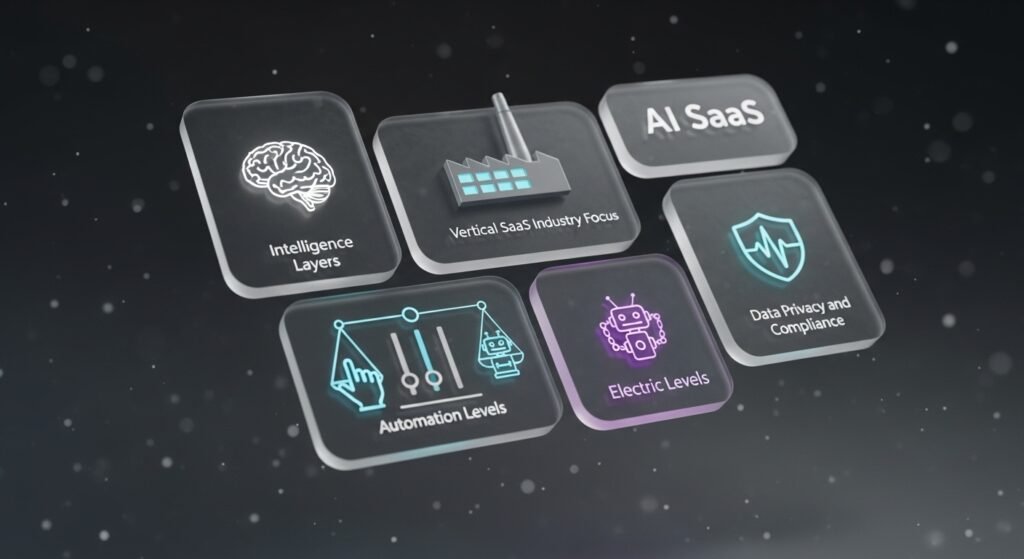
Artificial Intelligence and Software as a Service are joining forces in a big way right now. This combo is creating digital tools that can predict and learn. These tools are changing the way every business works. If you want to stay ahead, you need to understand ai saas product classification criteria. Knowing these rules helps you pick the right gear for your team. It is like having a map for a huge grocery store. You can find exactly what you need without getting lost.
What is an AI SaaS Product?
An AI SaaS product is basically a tool you use online that has its own brain. You do not need to install it on your computer. It works through your browser just like Gmail or Netflix. The “AI” part means it can think and solve problems. It uses smart tech like machine learning to get better over time. These products help businesses work faster and smarter every day.
The Intelligence Layer
Traditional software only follows strict “if-this-then-that” rules. AI SaaS is different because it uses probabilistic models. This means the software makes educated guesses based on data. It does not just do what it is told. It learns from its mistakes and finds better ways to work. This layer of intelligence makes the software feel alive and helpful.
Evolution of SaaS
We used to call SaaS a “System of Record” for storing data. Now, we call it a “System of Intelligence”. It has gone from being a digital filing cabinet to a smart assistant. This shift means software now helps you make choices instead of just holding files. It is a massive leap for how we use tech at work.
Why AI SaaS Classification is Critical
You might think all AI tools are the same, but that is a mistake. Classifying them helps you see the real differences. It keeps you from buying a fancy sports car when you need a truck. When you use ai saas product classification criteria, you make better bets. It saves you money and keeps your data safe.
Strategic Alignment
You want your tools to match your actual goals. Classification ensures you pick a tool that solves your specific pain points. It keeps your business strategy and your tech stack in sync. Without this, you might waste cash on tech you do not need.
Apple-to-Oranges Comparison
It is hard to compare two AI tools if they do different things. One might be great at writing while another is good at math. Classification groups similar tools together for a fair fight. This way, you can see which one truly wins on features and price.
Risk and Compliance Management
Some industries have very strict rules about data privacy. You cannot just use any AI tool if you handle medical records. Proper classification tells you which tools meet legal standards like GDPR or HIPAA. This protects your business from massive fines and legal headaches.
Cost Efficiency
AI can be expensive if you do not watch your spending. Understanding the classification helps you see the true ROI. You will know if you are paying for actual value or just hype. It helps you cut out the fluff and keep your budget tight.
Scalability Planning
As your business grows, your tools need to grow too. Classification helps you see which products can handle more data later. It prevents you from getting stuck with a tool that cannot scale up. You can plan for the future with total confidence.
Core AI SaaS Classification Criteria
1. Business Function and Practical Application
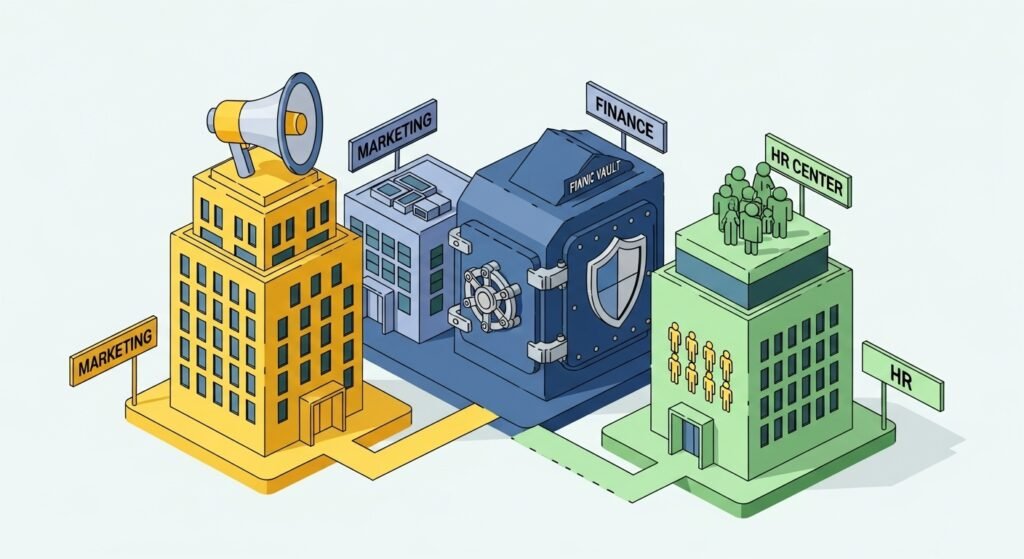
The first thing to look at is what the tool actually does for you. Every tool serves a specific purpose in a company. This is the most practical way to start your search.
- Marketing & Sales: These tools help you write ads and find new customers. Examples include Jasper for content and HubSpot for lead scoring.
- Finance and Accounting: These tools handle your money and spot fake charges. Fyle and Kensho are great for tracking expenses and making predictions.
- Customer Support: Chatbots like Intercom or Zendesk AI talk to your customers 24/7. They answer simple questions so your team can focus on big problems.
- Human Resources (HR): AI can read through thousands of resumes in seconds. Tools like HireVue and Eightfold.ai help you find the best hires.
- Operations & Legal: These tools can read long contracts to find risks. They also help manage inventory so you never run out of stock.
2. Type of AI Technology and “Brain” Architecture
The “brain” inside the software determines what it can handle. Different types of AI tech solve different kinds of problems.
- Machine Learning (ML): This is the most common type used for spotting trends. It is great for fraud detection and guessing what customers will buy.
- Natural Language Processing (NLP): This tech helps computers understand how humans talk. It powers things like translation apps and smart chatbots.
- Computer Vision: This lets software “see” images and videos. It is used for face recognition and reading text from photos.
- Generative AI: This is the new tech that creates things from scratch. ChatGPT and DALL-E are famous examples of this kind of AI.
- Reinforcement Learning: This AI learns by trial and error to get a reward. It is often used for games and complex decision-making systems.
3. User Type and Industry Specialization
Not every tool is a one-size-fits-all solution. Some are built for everyone, while others are very niche.
- Vertical AI SaaS: These tools are custom-built for one industry. PathAI is for doctors, while ROSS is only for lawyers.
- Horizontal AI SaaS: These are general tools that any business can use. Grammarly and Notion AI are perfect examples of this.
- Segment Focus: Some tools are made for small startups, while others are for huge corporations. You need to pick the one that fits your company size.
4. Level of Automation and Human Involvement
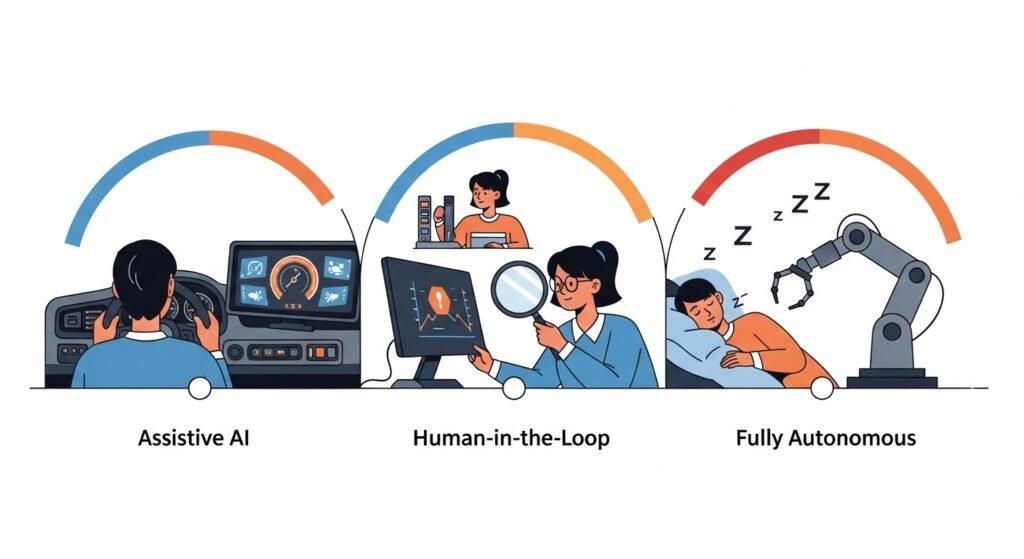
You need to decide how much control you want to keep. Some AI works alone, and some needs a boss.
- Assistive AI: This AI just gives you data and suggestions. You still make every single final choice yourself.
- Human-in-the-Loop (HITL): The AI does the heavy lifting, but you check its work. This is common in sensitive areas like medicine or law.
- Fully Autonomous AI: This software runs on its own with zero help. Think of an email responder that chats with customers while you sleep.
5. AI Dependency and Integration Type
This looks at how much the software relies on AI to function. It also looks at how it connects to your other tools.
- AI-Native SaaS: This software would not exist without AI. The AI is the main event, like in ChatGPT.
- AI-Augmented SaaS: This is old-school software that added AI later. Gmail adding an AI writing assistant is a perfect example.
- API-First Tools: These allow you to plug AI into your own apps. You use a service like OpenAI API to power your own tech.
- Standalone vs. Plug-and-Play: Standalone tools are complete platforms on their own. Plug-and-play tools are just small additions to things like Slack or Shopify.
6. Deployment Method and Data Architecture
Where the software lives matters a lot for security and speed. This is a key part of ai saas product classification criteria.
- Public Cloud (Multi-tenant): This is the standard way most SaaS works. It is cheap and fast because you share server space with others.
- Private Cloud / On-Premise: The software runs on your own private servers. This is a must for banks that need total data control.
- Hybrid & Edge AI: Some work happens in the cloud and some happens locally. This is great for speed when you do not have a good internet link.
7. Customization and Model Training
Some tools are ready to go, and some need a lot of setup. You have to decide how much work you want to do.
- Pre-trained Models: These are ready to use the second you sign up. Grammarly is a great example of a tool that just works.
- Custom-trained Models: You feed the AI your own company data to make it smarter. It takes longer to set up but gives much better results.
- Continuous Learning: Some AI gets smarter every time you use it. It adapts to your specific style and needs over time.
8. User Interface and Interaction Experience
How you talk to the AI determines how often your team will use it. Good design is just as important as the tech inside.
- Code-Free / No-Code: These tools use simple menus and buttons. Anyone can use them without knowing how to program.
- Developer-Focused: These are for people who like to write code. They use SDKs and command lines to get things done.
- Chat-based UI: You talk to the software like you are texting a friend. This is very intuitive and easy for everyone to learn.
9. Data Privacy, Ethics, and Compliance
Ethics is a huge topic in the world of AI right now. You have to make sure your tools are doing the right thing.
- Regulatory Compliance: The tool must follow laws like GDPR or HIPAA. This keeps your customer data safe and legal.
- Explainable AI (XAI): You should be able to see why the AI made a choice. This is vital for things like loan approvals or medical advice.
- Bias Resistance: AI can sometimes be unfair based on the data it learns from. Good tools have checks to make sure they treat everyone equally.
10. Pricing and Economic Models
You need to know how the tool will affect your bank account. Different models work better for different types of businesses.
- Freemium: You get a basic version for free and pay for the good stuff. This is perfect for testing a tool before you commit.
- Subscription-Based: You pay a flat fee every month or year. This makes it very easy to plan your budget.
- Pay-as-you-go / Consumption-Based: You only pay for what you actually use. This is very common for API tools and developers.
- Enterprise Tier: This is for big companies that need special help. It usually comes with 24/7 support and custom features.
Advanced Technical Classification Criteria
Data Processing Capabilities
How a tool handles data tells you how fast it will be. Some tools take their time, while others are instant.
- Batch Processing: The AI analyzes huge piles of data all at once. This usually happens at night when nobody is using the system.
- Real-Time Stream Processing: The AI gives you answers the second data comes in. This is vital for things like spotting a hacked credit card.
- Multi-Modal Integration: The tool can understand text, sound, and video all together. This gives a much more complete picture of what is happening.
Model Transparency and Interpretability
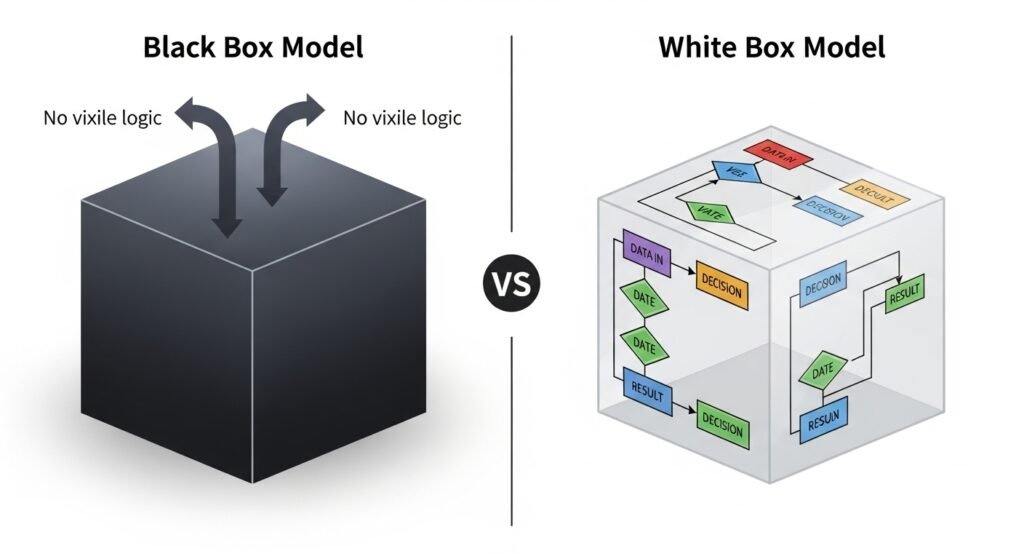
Knowing how a tool thinks is key for building trust. Some tools are open books, and others are mysterious.
- Black Box Models: These are very smart but hard to explain. You get a great answer, but you do not know how the AI got there.
- White Box Models: These are simple and easy to track. You can see every step of the logic behind every choice.
Security and Defensive AI
Hackers are using AI too, so your tools need to be tough. Security is a major part of ai saas product classification criteria.
- Adversarial Robustness: This is how well the AI fights off trick questions. It keeps bad actors from “poisoning” the AI with fake data.
- Data Encryption Standards: Look for tools that scramble your data so nobody can steal it. This is important both when data is moving and when it is stored.
Evaluating AI Maturity and Capability
Not all AI is at the same level of “smartness”. Some are just starting out, while others are geniuses.
- Basic Task Automation: This is the entry level for AI. It handles boring stuff like sorting emails or data entry.
- Predictive Capability: This AI looks at the past to guess the future. It can tell you which customers might leave your service soon.
- Prescriptive Capability: This is the highest level of AI help. It does not just predict a problem; it tells you exactly how to fix it.
- Cognitive Complexity: This measures if the AI can handle human emotions. It is important for things like customer service and therapy apps.
Organizational Impact and Change Management
Integration Depth and Ecosystem Fit
A tool is only good if it works with your other apps. You do not want a tool that sits on its own island.
- Native Ecosystems: Some tools are built to live inside Microsoft or Google. This makes them very easy to set up for your team.
- Middleware Requirements: You might need extra tools like Zapier to connect things. This can add extra cost and complexity to your setup.
Learning Curve and Training Requirements
You need to know how long it will take for your team to learn. Some tools are a breeze, and others are a chore.
- Low Touch: Your team can start using the tool in just a few minutes. These are great for boosting productivity right away.
- High Touch: These platforms are complex and need real training. You might even need to hire a specialist to run them.
Step-by-Step Selection Framework
Choosing a tool should be a logical process. Follow these steps to find the perfect match for your business.
- Problem Definition: Start by writing down the exact problem you want to solve. Do not buy a tool just because it sounds cool.
- Technology Audit: Pick the type of AI that fits the job. If you need to write ads, look at Generative AI.
- System Compatibility: Make sure the new tool talks to your old tools. Check for integrations with things like Slack or your CRM.
- Data Sovereignty Check: Find out where your data is stored and who owns it. You should always keep control of your company’s info.
- ROI Projection: Compare the cost of the tool to the time it saves you. If it does not save you more than it costs, keep looking.
Gaps in Current AI SaaS Classification
The world of AI is moving so fast that we are still catching up. There are a few areas where we need better rules.
- The Lack of Global Standardization: There is no single score for “AI Accuracy” yet. Every company uses their own way to measure success.
- Integration Depth: We often forget to check how well tools truly talk to each other. Real integration is more than just sharing a login.
- Ethical Guardrails: We need better ways to test for bias in every tool. This should be a standard feature for every AI product.
- Vendor Lock-in Risks: It can be very hard to move your data to a new tool. This is a big risk that many businesses ignore.
Future Trends in AI SaaS Classification
Agentic Workflows
The future is not just about tools you use. It is about AI agents that work for you while you do other things. These agents can handle whole projects from start to finish.
Edge Intelligence
We will see more AI running on local phones and laptops. This makes everything faster and much more private. You will not even need a web link to use some AI.
Sovereign AI
Big companies and even whole countries are building their own AI. They want to keep their data behind their own firewalls. This will create a whole new class of private AI tools.
Niche Diversification
We are moving away from general AI to very specific tools. Soon, there will be an AI tool for every single tiny job in every industry. This “Micro-SaaS” trend will give us more power than ever.
Final Summary and Strategic Compass
Picking the right AI tool does not have to be a headache. If you use ai saas product classification criteria, you will stay on track. Remember that the best tech should feel invisible. It should just work and help you grow without any drama.
Invest in tools that can learn and scale as you do. Stay focused on your goals and do not get distracted by flashy new features. With this guide, you have everything you need to win in the age of AI. Go out there and find the tools that will take your business to the next level.
FAQs
How do you identify the right use case for your SaaS product?
To identify the right use case, you should evaluate which core business function the tool supports. Is it operational, such as managing logistics, or is it strategic, like market forecasting? Determining whether the user intent is creative (content generation) or analytical (data processing) will help you narrow down the primary application of the product.
What role does the buyer persona play in product classification?
Buyer personas are essential because they dictate who controls the budget and who uses the product daily. Classification changes depending on whether the tool is designed for C-level executives who need high-level insights or for operational teams who require specific, task-oriented features.
How does your pricing model influence your final classification?
Pricing models act as a signal for the product’s market position. For instance, a freemium model suggests a high-volume, low-touch tool aimed at individual users or SMEs. In contrast, a customized enterprise plan indicates a high-touch, complex solution that requires significant integration and support.
What technology stack signals a specific AI product type?
The underlying technology often dictates the category. A stack built on Large Language Models (LLMs) typically signals a focus on content generation or communication. On the other hand, if the stack relies heavily on real-time machine learning predictions, the product is likely intended for forecasting, risk management, or anomaly detection.
How should you handle SaaS products that span multiple categories?
For products that cross categories, it is best to choose a temporary classification based on the strongest or most frequent use case. As you gather user feedback and see where the most value is being generated, you can refine your messaging and re-position the product to better reflect its true market fit.
How can classification shape your fundraising narrative?
Investors use classification to understand your Total Addressable Market (TAM) and competitive landscape. A clear classification allows you to map your product on a quadrant—such as cost versus complexity—making it easier to show traction in a specific niche and prove your growth potential.
Why is classification important for go-to-market strategies?
Correct classification ensures that your sales and marketing teams are aligned. Without it, marketing might promote benefits that the sales team cannot deliver, or the support team might use terminology that confuses the user. A unified category story attracts the right buyers and simplifies the customer journey.
How early should a developer define an AI SaaS product’s classification?
Classification should ideally begin during the MVP (Minimum Viable Product) stage. Defining the category early helps in prioritizing features that deepen the main use case. If a new feature does not serve the primary buyer persona or the established category, it might be a distraction from the core product roadmap.
Can a product’s AI classification change over time?
Yes, as a product matures, its classification can shift. A tool that starts as a simple AI-augmented application may evolve into an AI-native platform as more core features become dependent on advanced machine learning. Regularly reviewing your classification ensures it stays accurate as the technology evolves.
How does product classification affect your SEO strategy?
Your classification directly impacts the search intent you attract. If your H1 headings and meta descriptions do not match your product’s true category, you may attract low-converting traffic. Aligning your URL structure and blog content with your classification prevents keyword cannibalization and improves search visibility.
What are the dangers of misclassifying an AI SaaS product?
Misclassification leads to targeting the wrong audience and choosing incompatible monetization models. It can also confuse both investors and customers regarding the product’s value proposition. Ultimately, this leads to higher churn rates as users find the product does not meet the expectations set during the sales process.
How do you use product classification to attract early adopters?
Early adopters often look for tools that solve a very specific, high-priority gap. By precisely classifying your product to address an urgent market problem, you signal to these users that your tool is built for their exact needs, which helps build a loyal initial user base.
What is the difference between a “System of Record” and a “System of Intelligence”?
A System of Record is primarily a digital filing cabinet designed for storing and retrieving data. A System of Intelligence, however, uses that data to provide proactive insights, predict future outcomes, and assist in decision-making, effectively moving from passive storage to active assistance.
How do “White Box” models differ from “Black Box” models in procurement?
White Box models are transparent, allowing buyers to see every logical step in the decision-making process, which is vital for highly regulated industries. Black Box models are often more powerful but less interpretable, making them a higher risk for companies that require strict audit trails.
What is “Adversarial Robustness” in AI SaaS?
Adversarial robustness refers to a tool’s ability to resist “prompt injections” or data poisoning. This is a critical security criterion because it prevents bad actors from manipulating the AI into giving incorrect answers or exposing sensitive information through trick questions.
Why is “Data Sovereignty” a major factor in enterprise AI?
Data sovereignty involves knowing exactly which legal jurisdiction your data falls under. Many large organizations, particularly in Europe, require that their data stays within specific borders to comply with local laws. Classification helps identify which vendors can guarantee this level of data control.
How does “Vertical AI” differ from “Horizontal AI” in market positioning?
Vertical AI is tailor-made for a specific industry, like healthcare or law, and often comes with pre-built models trained on industry-specific data. Horizontal AI is designed for broad use across many sectors, focusing on general tasks like writing, scheduling, or basic data analysis.
What are “Agentic Workflows” in modern AI classification?
Agentic workflows represent a shift from tools that users operate to autonomous agents that perform tasks on the user’s behalf. These agents can manage multi-step processes from start to finish with minimal human intervention, representing a higher level of AI maturity and automation.
How does “Model Drift” affect long-term product classification?
Model drift occurs when the AI’s performance changes as the data it encounters in the real world evolves. If a model is not regularly updated or re-trained, it may lose its predictive accuracy, potentially shifting it from a high-performing “System of Intelligence” back to a less reliable tool.
What is the importance of a “Data Taxonomy” in AI classification?
A data taxonomy provides the structure that allows AI models to interpret data consistently across different systems. It reduces ambiguity and ensures that sensitive or regulated information is tagged correctly, which is the foundation for effective data governance and accurate AI output.