 Skip to content

Finding a good conservative search engine is a big deal today. Many people feel like big tech companies are not being fair. They worry that their search results are being messed with. You might feel like you only see one side of the story. This is why people are looking for new ways to find info. A conservative search engine can help you find what you need without the bias. It helps you keep your data safe from trackers too. You deserve to see the whole truth when you look things up. These tools are built for folks who value freedom and privacy. Using them is like taking back control of your own computer. It is a smart move for anyone tired of being watched.
Understanding the Landscape: What Is a Conservative Search Engine?
A conservative search engine is a tool that puts your values first. It does not try to hide certain news stories or opinions. Most big sites use math codes that might favor one political side. These new engines aim to be more balanced for everyone. They focus on giving you the raw data without any hidden filters. You can trust that the results are not picked just to please a big boss. Many of these sites also keep your name and location a secret. This means you can search for anything without being followed by ads. It is a win for both free speech and your own personal safety.
Definition and Core Philosophy
These platforms are built on the idea that everyone should have access to facts. They believe that a search engine should be a neutral tool for discovery. They do not want to be the “truth police” for your daily web browsing. Instead, they provide a space where different viewpoints can exist together. The main goal is to stop the spread of biased info. They want to make sure you can find right-leaning news just as easily as anything else. This philosophy centers on the user rather than the advertiser or a political group.
Ideologically Conservative Platforms
Some engines are made specifically for people with conservative views. They make sure that independent media and right-wing voices are easy to find. These sites often highlight stories that mainstream media might ignore or bury. They use special indexes to ensure these voices get a fair shake in the rankings. You won’t have to dig through pages of results to find a conservative take. These platforms are a home for people who feel left out by big tech. They celebrate traditional values and open debate for all users.
Privacy-Oriented Alternatives
Many folks choose these engines because they hate being tracked online. Privacy-focused sites do not save your search history or your IP address. This means no one can build a folder of information about your personal life. Conservatives often prefer this because it stops “Big Tech” from knowing too much. You can look up sensitive topics without worrying about a digital paper trail. These sites act like a shield between you and the rest of the web. It is a great way to stay anonymous while getting your work done.
The Family-Friendly Aspect
A huge part of this movement is keeping the internet safe for kids. Many conservative search engines have strict rules about what shows up. They work hard to block explicit content and adult images automatically. This makes them a top choice for parents who want a clean experience. You can let your children do homework without fear of bad pop-ups. It is all about creating a digital environment that respects your home life. This focus on family values sets them apart from the “anything goes” sites.
The Catalysts for Change: Why Users Are Moving Away from Big Tech
People are leaving the old search giants in record numbers. They are tired of feeling like they are being manipulated by a screen. Every time you click, a big company is likely taking notes on you. This makes many users feel uncomfortable and even a bit watched. There is a growing sense that the internet has become too controlled. Folks want the old web back where you could find anything easily. Moving to a conservative search engine is a way to protest this control. It is a simple step that makes a huge difference in your life.
Addressing Search Engine Bias
There is a big worry that search results are tilted to the left. Many users feel that conservative websites are pushed to the bottom of the list. This is often called “shadow-banning” in the digital marketing world. It makes it hard to find the news you actually want to read. A conservative search engine fixes this by using a more honest ranking system. They ensure that all voices get a fair chance to be seen and heard. You get a better view of the world when the bias is removed.
The Problem of Data Privacy
Big tech companies make money by selling your personal info to others. They track where you go and what you buy every single day. This data collection can feel like a total invasion of your personal space. Most people do not want their every move recorded by a giant corporation. Conservative search engines offer a way out of this data trap. They prove that you can provide great results without spying on people. Keeping your data private is a right that everyone should enjoy.
Combating Online Censorship
Censorship has become a major talking point in recent years. Many users have seen their favorite creators get kicked off big platforms. This “de-platforming” makes people feel like they are being silenced. A conservative search engine fights back by keeping the internet open for all. They do not block sites just because they have a different opinion. This commitment to free speech is why so many people are switching over. It is about making sure the web stays a place for everyone to speak.
Escaping the Echo Chamber
When a site tracks you, it only shows you things it thinks you like. This creates an “echo chamber” where you never see a different view. It can make you feel like the whole world thinks exactly like you do. This isn’t good for a healthy society or for your own personal growth. A neutral search engine shows you results based on facts, not your past clicks. You get to see a wider range of topics and news from all over. It helps you stay informed and keeps your mind sharp and ready.
Gatekeeping of Information
For a long time, a few big companies decided what news was important. They acted as gatekeepers for everything we saw on our phones and computers. This meant they could hide stories that didn’t fit their specific narrative. Conservative search engines break these gates down for the average user. They give you a direct line to independent news and alternative sources. You no longer have to rely on a single source for all your info. It is a much more democratic way to use the internet every day.
Essential Features to Look for in an Alternative Search Engine
When you pick a new engine, you want to make sure it is high quality. Not all alternative sites are built with the same level of care. You should look for specific tools that protect your rights and your data. A good conservative search engine will be open about how it works. It should be easy to use on your phone or your home computer. You want a site that feels fast and gives you accurate answers. Finding the right features will make your browsing much more enjoyable.
Robust Privacy Protection
The best sites will use end-to-end encryption to keep your data safe. This means that even the people running the site can’t see your searches. You should check for a clear “no-profiling” policy on their main page. This ensures that they aren’t building a digital map of your personal life.
- No IP logging ensures that your physical location stays a total secret.
- Encrypted connections keep hackers from seeing what you are doing online.
- No tracking cookies stop other websites from following you around the web.
Algorithmic Transparency
You deserve to know why one site ranks higher than another one. A good engine will explain its ranking algorithms in simple English. They should not have secret “blacklists” of websites they don’t like. Transparency builds trust between the search engine and the person using it. Look for sites that are proud to show how their math works for you. This prevents the kind of hidden bias that people hate about big tech. It is all about being honest with the people who use the platform.
Content Filtering Options
A great conservative search engine lets you decide what you want to see. Some sites have a “bias meter” or a filter for political affiliations. You can choose to see more right-leaning results if that is your goal.
- Individual filters allow you to customize your news feed based on your interests.
- Political toggles let you switch between different viewpoints with just one click.
- Safe search modes help you keep adult content away from your family and kids.
No Personalized Advertising
Most search engines show you ads based on things you searched for yesterday. This can be annoying and it shows that they are watching your every move. A quality alternative engine will only show ads based on your current search word.
- Contextual ads mean the ad only relates to what you are looking at right now.
- No data selling ensures your habits aren’t sold to marketing firms for profit.
- Private ad models keep your shopping habits between you and the store.
Independent Search Index
Many small sites just pull their results from Google or Bing’s database. This means they might still have the same old biases hidden inside. An independent search index is a huge plus for any new search tool.
- Proprietary crawlers go out and find the info on their own without help.
- Diverse sources ensure that you aren’t just seeing the same big media sites.
- Freedom from big tech means the engine can’t be shut down by a giant.
Top Conservative and Freedom-Focused Search Engines
There are many great choices out there for you to try right now. Each one has a slightly different focus depending on what you need. Some are better for news, while others are better for total privacy. It is a good idea to try a few and see which one fits your style. You might find that you like one for work and another for home. These tools are getting better and faster every single day. Here is a look at the top players in the market today.
Tusk Search
Tusk is a big name for people who want a conservative search engine. It was built to be a direct answer to the bias found on other sites. It focuses on giving you the news that big tech might try to hide.
- Anti-censorship focus ensures that you can find the truth about any topic.
- GOP-friendly results make it a top choice for conservative voters and thinkers.
- Unfiltered access gives you a raw look at what is happening in the world.
FreeSpoke
FreeSpoke is all about showing you every side of a story. They believe that you are smart enough to decide the truth for yourself. Their layout is very easy to read and looks great on any screen.
- Side-by-side news let you see how different outlets are reporting one story.
- Clear bias labels tell you if a source is left, right, or in the center.
- Privacy first means they don’t track what you are looking for at any time.
4Conservative.com
This site is very straightforward about its mission and its goals. It wants to be the go-to place for traditional American values online. It filters out a lot of the noise from liberal media sites.
- Hand-picked sources ensure that you are getting high-quality conservative news.
- Clean interface makes it very easy to find exactly what you are looking for.
- Values-driven content helps you stay connected to the things that matter to you.
Swisscows
If you want a family-friendly search engine, this is the one for you. They are based in Switzerland and follow very strict privacy laws. They are very proud of their “moral” approach to the digital world.
- Semantic technology helps the engine understand the meaning behind your words.
- Zero tracking is a promise they have kept for many years for their users.
- 100% clean results make it the safest choice for homes with young children.
Gibiru
Gibiru has been around for a long time and is known for being “uncensored.” It is a favorite for folks who want to see what is hidden in the deep web. It is very fast and easy to use on any browser you like.
- Anonymity guaranteed with every search you perform on their website.
- Fast results mean you won’t be waiting around to find your information.
- Bypasses filters that other search engines use to block certain websites.
Brave Search
Brave started as a browser but now has its own powerful search tool. It is one of the fastest-growing search engines in the world today. It is built for speed and for keeping your data a secret.
- Independent index means they don’t rely on the big guys for their info.
- The Goggles feature lets you choose how you want your results to be ranked.
- Built-in privacy works perfectly with the Brave browser for total security.
DuckDuckGo
This is the most famous privacy engine out there for the general public. While it is not strictly political, many conservatives love it for the privacy. It has a very friendly look and is easy to switch to.
- Bang shortcuts let you search other sites directly from their search bar.
- No search bubbles mean everyone sees the same results for the same word.
- Strict privacy keeps your history off the servers and out of the hands of ads.
Startpage
Startpage is a clever tool for people who like Google’s results but hate the tracking. It acts like a shield that hides your identity from the big search giant. You get the best of both worlds with this simple tool.
- Anonymous view lets you browse sites without them knowing who you are.
- Great accuracy because it uses the world’s largest search database for you.
- European based so it follows very high standards for data protection laws.
Qwant
Qwant is a popular choice for people who want to avoid the American tech giants. It is based in France and has a very cool, modern design. It is great for finding news and social media trends quickly.
- Neutral results mean they don’t try to change your mind about anything.
- Qwant Junior is a special mode just for kids to use at school or home.
- Privacy laws in Europe are much stronger than in many other places.
Mojeek
Mojeek is a true underdog that is doing something very difficult. They are building their own map of the web from the ground up. This makes them a very important player for true web independence.
- No tracking ever is their core promise to every single person who visits.
- Independent crawler means they are not controlled by any big tech firm.
- Unbiased ranking ensures that the best info wins, not the biggest company.
Additional Notable Mentions
There are other tools that can help you find info without the typical bias. Each of these offers something unique for the savvy internet user.
- Bing is often seen as more neutral than Google for certain news topics.
- Yippy uses “clustering” to help you find deep info on very specific subjects.
- Searx is a tool for tech-savvy folks who want to build their own searcher.
Comparison of Conservative and Privacy-Focused Search Engines
| Search Engine | Primary Focus | Index Source | Privacy Standard | Family Safety |
| Tusk Search | Anti-Censorship | Proprietary & Mixed | High (No logs) | Built-in filters |
| FreeSpoke | Bias Neutrality | Independent Index | No profiling | Strict adult filter |
| Swisscows | Family Values | Proprietary (Semantic) | Swiss privacy laws | 100% porn-blocked |
| Brave Search | Independence | Independent Index | Complete anonymity | Standard filters |
| DuckDuckGo | Universal Privacy | Bing / DuckDuckBot | No tracking | Customizable |
| Gibiru | Unfiltered Results | Google (via Proxy) | Encrypted/Private | Uncensored |
| Startpage | Google Results | Google (Buffered) | Zero data storage | Standard filters |
| 4Conservative | Traditional Values | Curation-based | Privacy-centered | High filtering |
| Mojeek | Infrastructure | Independent Crawler | No tracking ever | Neutral/Safe |
| Qwant | EU Privacy | Independent / Bing | No user profiling | Qwant Junior mode |
| Bing | AI Integration | Microsoft Index | User-controlled | Multi-level safety |
Feature and Tool Analysis
Content and Political Tools
- Political Toggles: Tusk Search and FreeSpoke lead the market by offering “Left, Center, and Right” buttons to help users see all sides of a story.
- Bias Meters: FreeSpoke uses a visual meter to label the political leanings of news sources in real-time.
- Gippr AI: Tusk features a conservative-aligned chatbot designed to provide answers without “woke” or liberal bias.
- Goggles: Brave Search allows users to apply community-led “Goggles” to change how results are ranked based on specific values.
Privacy and Security Highlights
- Anonymous View: Startpage offers a proxy button that lets you visit websites without those sites ever seeing your IP address or identity.
- Semantic Search: Swisscows uses a “meaning-based” system rather than just keywords, ensuring family-friendly results are more accurate.
- Encrypted Proxies: Gibiru acts as a shield, scrubbing all Google trackers before the results ever reach your computer.
- No Profile Creation: Unlike mainstream engines, none of the platforms listed above build a “shadow profile” of your search habits to sell to advertisers.
Infrastructure and Independence
- True Independence: Mojeek and Brave Search are the only major players that do not rely on Google or Bing for their primary search data.
- Swiss-Based Servers: Swisscows hosts all data in Switzerland, benefiting from the world’s strictest legal protections for personal information.
- Metasearch Capabilities: Searx and DuckDuckGo pull from multiple sources to ensure you get the widest possible range of information without being tracked.
- Cluster Technology: Yippy groups your results into logical “clusters” so you can find specific categories of information faster.
The Technical Reality: How Search Indexing Works
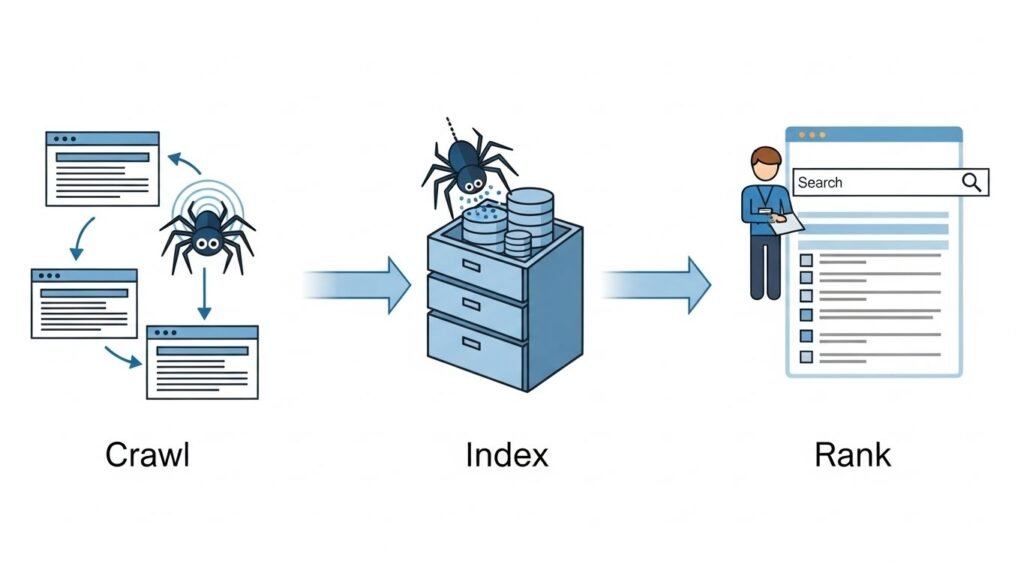
It is helpful to know how these sites actually find your answers. It isn’t magic; it is a lot of hard work by computers and code. Understanding this helps you see why some engines are better than others. It also shows why it is so hard to build a new one from scratch. These technical steps are what make your browsing experience fast and helpful.
Crawlers and Spiders
Search engines use small programs called crawlers or spiders to read the web. They go from link to link and take notes on what every page says.
- Discovery is the process of finding new websites as they are created.
- Indexing is like putting all those notes into a giant digital library.
- Updating ensures that the search engine knows when a page changes its info.
Metadata and Ranking Signals
Once the info is in the library, the engine has to decide which page is best. It looks for clues like the title of the page and how many other sites link to it.
- Keywords help the engine know if the page matches what you typed in.
- Authority signals tell the engine if a website is trustworthy or not.
- User intent is a guess about what you are actually trying to find.
Comparing Search Dynamics: Traditional vs. Conservative Engines
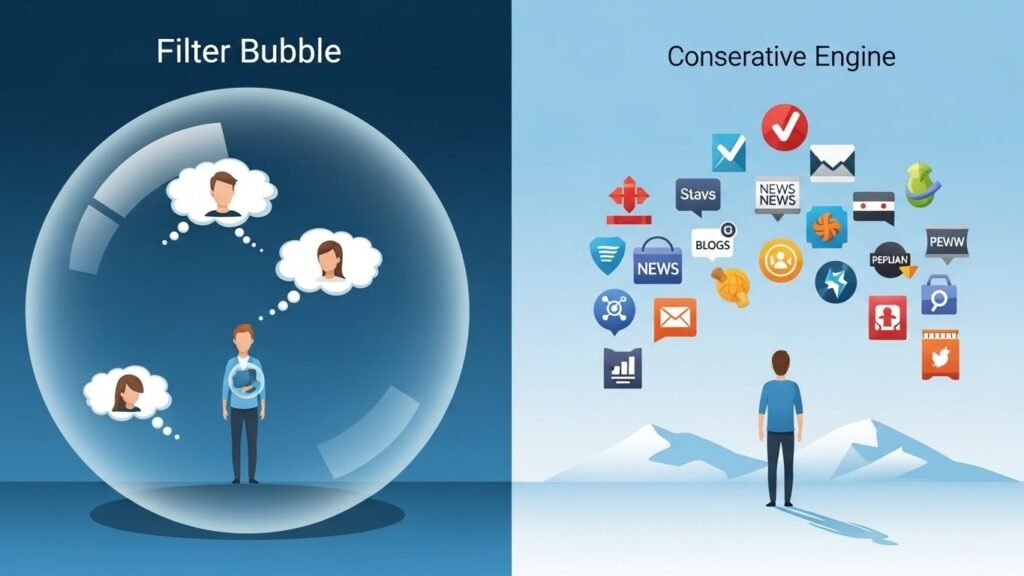
When you compare these two types of sites, the differences are very clear. Traditional engines are built to sell your attention to the highest bidder. Conservative engines are built to serve the user first and foremost. This chart helps show the main points of comparison for you.
| Feature | Traditional (Google/Bing) | Conservative/Privacy-Focused |
| Data Collection | High (Profiling/Tracking) | Low to Zero (Anonymous) |
| Result Ranking | Engagement/Relevancy-based | Ideological neutrality/Family-friendly |
| Censorship | Active moderation/Filtering | Minimum intervention/Uncensored |
| Revenue Model | Targeted ads based on behavior | Non-tracking ads or community support |
Practical Benefits of Making the Switch
Switching to a new search engine can improve your daily life in many ways. You might be surprised at how much better you feel when you aren’t being tracked. It is a small change that leads to a much more peaceful online experience. You will notice that you see fewer annoying ads that follow you around. It is like cleaning up your digital house for the first time in years.
Securing Your Digital Identity
Your search history says a lot about who you are as a person. It shows your health worries, your political views, and your shopping needs.
- Stop data brokers from getting a list of your private habits and interests.
- Protect your IP so hackers can’t find your home address or city.
- Keep your secrets between you and your computer screen at all times.
A Family-Safe Digital Environment
Parents have a lot to worry about when their kids go online today. A conservative search engine acts like a digital bodyguard for your family.
- Filter bad images that might show up in a normal image search by accident.
- Block unsafe sites that try to steal info or show bad things to kids.
- Peace of mind knowing that your children are searching in a safe zone.
Freedom of Choice
You should be the one who chooses what info is worth your time. These engines give you the power to find whatever you are looking for easily.
- Alternative health info can be found without being hidden by big pharma.
- Local news often gets more space on these smaller, more focused platforms.
- True diversity of thought is only possible when you see all the options.
Diverse Perspectives
Seeing only one side of an argument makes it hard to think for yourself. These engines help you stay well-rounded by showing different points of view.
- Break the bubble and see what people on the other side are saying.
- Compare stories to see how different news outlets spin the same facts.
- Think clearly by having all the data right there in front of you.
The Socio-Political Impact of Niche Search Engines
These platforms are doing more than just finding links; they are changing the world. They are a sign that people want more freedom in their digital lives. This movement is putting pressure on the big companies to do better. It is a very exciting time for anyone who loves the open internet. These sites are a vital part of keeping our democracy healthy and strong.
Breaking the Digital Monopoly
For too long, one or two companies owned the entire search market. This gave them way too much power over what people thought and did.
- Encourage innovation by giving new companies a chance to try new ideas.
- Force better privacy by showing that users actually care about their data.
- Create competition which always leads to better products for the average person.
Impact on Journalism
Journalists need a way to reach people without being blocked by a giant. Conservative search engines give independent writers a fair chance to be read.
- Support local writers who might not have a huge marketing budget to use.
- Keep truth alive by ensuring that tough stories don’t get buried by ads.
- New ad revenue helps small news sites stay in business without big tech.
The Future of the Search Industry
The way we look for info is going to change a lot in the next few years. New technology is making it easier for small teams to build great tools. We are moving toward a web where the user has much more power. It is a future that looks very bright for free speech and privacy. You can be a part of this change by using these tools today.
The Role of Artificial Intelligence
AI is the newest tool that everyone is talking about in the tech world. It can be used to summarize long articles or answer complex questions.
- Neutral AI can help give you facts without any political spin at all.
- Fast answers mean you don’t have to click through ten sites to find a date.
- Smart filtering helps the engine understand exactly what you need right now.
Decentralized Search Indexes
Some people are building search engines that no one person or company owns. This is called “decentralization” and it is a very big idea for the web.
- Community-owned data ensures that no one can ever turn the site off.
- Blockchain tech can be used to keep search results honest and fair.
- No central boss means no one can tell the engine to censor certain words.
User Sovereignty
This means that you are the king or queen of your own digital life. You get to set the rules for how you use your computer and the web.
- Pick your ranking by choosing which factors are most important to you.
- Control your data by deciding who gets to see your search habits.
- Own your digital self instead of being a product for a giant company.
Challenges and Considerations for Users
No tool is perfect, and it is important to be honest about that fact. Smaller search engines sometimes have a few downsides compared to the giants. Being aware of these will help you have a better experience overall. You can use multiple tools to get the best results for your specific needs. It is all about being a smart and savvy user of technology.
Depth of Indexing
Google has billions of dollars to spend on finding every single page on the web. Smaller engines might not have quite as many pages in their library yet.
- Niche topics might be harder to find on a very small, new search site.
- Technical data like code snippets might be easier to find on a big engine.
- Give it time because these smaller indexes are growing every single day.
Integration with Other Tools
Big tech makes it easy to use search with your email, maps, and calendar. Moving away from that “all-in-one” system can take a little getting used to.
- Extra steps might be needed to send a search result to your map app.
- Separate accounts mean you have to remember more than just one password.
- Worth the trade for many people because the privacy is more important.
Speed and Performance
Giant companies have servers all over the world to make things lightning fast. Smaller engines might be just a tiny bit slower in some parts of the world.
- Server distance can affect how long it takes for a page to load for you.
- Independent crawlers might take a second longer to find a brand-new page.
- Still very fast for almost everything you do in your normal daily life.
How to Successfully Transition to a Conservative Search Engine
Making the switch is actually much easier than you might think it is. You don’t have to be a computer expert to take back your privacy today. It only takes a few minutes to change your settings and get started. Once you do it, you will likely never want to go back to the old way. It is a very empowering feeling to search the web on your own terms.
Setting Your New Default
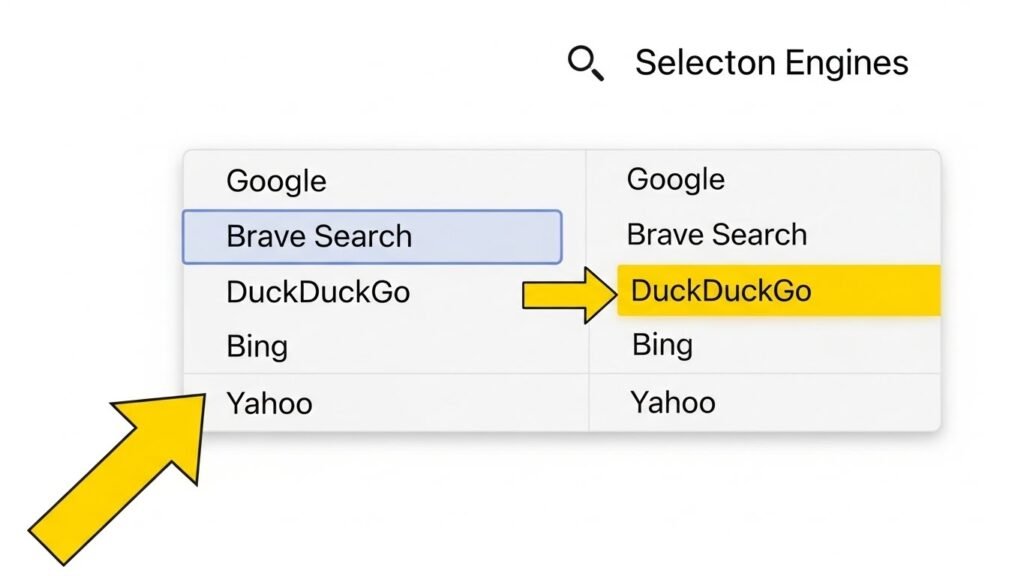
You can tell your browser to use your new search engine every time you type in the bar. This makes it the default choice for all your future look-ups.
- On Chrome go to settings and look for the “search engine” section to change it.
- On iPhone go to Safari settings and pick your favorite private search engine.
- On Firefox you can easily add new search tools with just a couple of clicks.
Combining Tools
For the best privacy, you should use more than just a new search engine. Combining a few tools will make you almost invisible to trackers and ads.
- Use a VPN to hide your location from every website you visit on the web.
- Privacy browsers like Brave or DuckDuckGo offer an extra layer of safety.
- Ad blockers stop those annoying pop-ups before they even show up.
Supporting the Ecosystem
These smaller companies need your help to keep growing and getting better. The more people use them, the more data they have to improve their results.
- Tell your friends about the new site you are using and why you like it.
- Give feedback to the developers if you find a bug or have an idea.
- Stay loyal even if the site is a tiny bit slower than the giants at first.
Final Thoughts: Reclaiming Digital Sovereignty
In the end, this is about your freedom and your right to choose. You don’t have to let a few big companies run your entire digital life. By picking a conservative search engine, you are taking a stand for your values. You are saying that your privacy and your opinions actually matter. It is a small step, but it is a very powerful one for your future.
The internet should be a place where everyone can find the truth easily. We deserve tools that respect us and don’t try to manipulate our minds. There are so many great alternatives out there waiting for you to try them. Pick one today and see how much better the web can truly be. You have the power to change your digital world with just one click. It is time to search on your own terms and find the truth for yourself.
The rise of these engines is a great sign for the future of the whole world. It shows that we still value free speech and the right to keep our lives private. Supporting these tools helps build a better internet for our kids and grandkids. Let’s work together to make the web a fair and honest place for everyone. Happy searching and enjoy your new-found freedom online today!
FAQs
How do conservative search engines differ from standard incognito mode?
Incognito mode or private browsing only prevents your browser from saving your history, cookies, and site data locally on your device. However, it does not stop the search engine itself from tracking your IP address, search terms, and location on its servers. A conservative or private search engine goes a step further by ensuring that no data is stored on their end, providing a level of anonymity that incognito mode cannot achieve on its own.
Do these search engines work with standard browsers like Chrome or Safari?
Yes, almost all conservative search engines are web-based and can be used on any browser including Google Chrome, Apple Safari, Microsoft Edge, and Mozilla Firefox. You can simply visit the engine’s website or set it as your default search tool in your browser’s settings menu. Some, like Brave, offer their own dedicated browser for an even more integrated and secure experience.
Can using a conservative search engine affect my local search results?
Standard search engines use your precise GPS location to show you “near me” results, such as local restaurants or weather. Because conservative engines often strip away your tracking data, they may not know exactly where you are. To get accurate local results, you may need to manually type your city or zip code into your search query (e.g., “pizza shops in Dallas”) rather than relying on automatic location detection.
Are conservative search engines slower than Google?
In most cases, the difference in speed is negligible. While giant tech firms have massive server networks that can deliver results in milliseconds, modern alternative engines have optimized their code to be extremely fast. The “speed” you feel is often related to the lack of heavy tracking scripts and data-hungry advertisements, which can actually make some private engines feel snappier than the mainstream alternatives.
How do these engines handle “fact-checking” labels?
Many mainstream search engines use third-party fact-checkers to label or suppress content they deem “misinformation.” Conservative search engines generally avoid these labels, operating under the philosophy that users should be presented with all available information and allowed to decide the truth for themselves. This prevents a single organization from acting as the ultimate arbiter of what is true or false.
Do conservative search engines have their own maps and image search?
Some independent engines, like Brave, are building their own image and map indexes. Others use a “metasearch” approach, where they pull images or map data from larger databases but strip away the tracking components before showing them to you. While they may not always have the same deep features as Google Maps (like live traffic or 360-degree street views), they provide enough information for most daily navigation needs.
Is my search history shared with the government?
Mainstream search engines are frequently subpoenaed for user data and search histories. Because many conservative search engines have a “zero-logs” policy, they physically do not have any data to hand over, even if a government agency requests it. This “privacy by design” approach makes it impossible for your search history to be used against you in a legal or political context.
Will I still see advertisements on these platforms?
Many alternative search engines still show ads to stay in business, but the ads are “contextual” rather than “behavioral.” This means if you search for “hiking boots,” you will see ads for hiking boots. However, the engine will not remember that you searched for boots and follow you around the internet with more ads for the next two weeks. Your privacy remains intact because the ad is tied to the search term, not your identity.
How do these engines combat “shadow-banning”?
Shadow-banning occurs when a search engine suppresses a specific website or viewpoint without telling the owner. Conservative engines typically use transparent algorithms that prioritize relevance and authority rather than “social credit” or political alignment. This ensures that independent blogs and alternative news sites have a fair chance to appear on the first page of results.
Can I use these search engines on my mobile phone?
Absolutely. You can download dedicated apps for engines like DuckDuckGo or Brave from the App Store or Google Play Store. Alternatively, you can change the default search engine in your mobile browser settings. This ensures that your searches remain private whether you are at your desk or on the go.
Are these search engines completely free to use?
Yes, the vast majority of conservative and private search engines are free for the public. They generate revenue through non-tracking advertisements or through “affiliate” links. Some also offer premium, paid versions for users who want extra features like built-in VPNs or specialized server locations, but the basic search functionality is almost always free.
Do conservative search engines use Google’s data?
It depends on the engine. “Proxied” search engines like Startpage use Google’s index but act as a middleman to protect your identity. Other engines like Mojeek and Brave have built their own independent crawlers and indexes. This independence is a key feature for users who want to be completely free from the influence of Big Tech’s data processing.
What is the “Search Engine Manipulation Effect” (SEME)?
SEME refers to the power a search engine has to shift the opinions of undecided voters simply by ranking one perspective higher than another. Studies have shown this can influence election outcomes. Conservative search engines aim to mitigate this effect by providing a more balanced or unfiltered set of results, preventing the algorithm from “picking a winner” in political debates.
Can a search engine actually be “unbiased”?
While every algorithm has some set of rules, conservative search engines strive for “neutrality” by not using personal data to filter results. Instead of showing you what it thinks you want to see based on your political history, it shows you what is most relevant to the words you typed. This return to “keyword-based” search is the closest the digital world can get to true lack of bias.
How do family-friendly engines block explicit content?
Engines like Swisscows use advanced AI and semantic analysis to understand the meaning of a webpage. Unlike simple keyword filters that can be easily bypassed, these semantic engines look at the entire context of a site to ensure no adult or violent content reaches the user. This makes them much more reliable for households with children.
Do these engines support “Dark Mode” and other customizations?
Most modern alternative engines offer a variety of themes, including dark mode, high contrast, and font size adjustments. Because these engines prioritize the user experience without the clutter of excessive tracking and data-gathering tools, their interfaces are often highly customizable and user-friendly.
Can I save “Bookmarks” or “Favorites” on these engines?
Because these engines do not track you or require an account, they generally do not save your bookmarks on their servers. Instead, they encourage you to use your browser’s built-in bookmarking feature. This keeps your list of favorite sites stored locally on your own device rather than in a corporate database.
Why do some conservative engines focus on Switzerland or Europe?
Countries like Switzerland have some of the strongest privacy laws in the world. By hosting their servers in these jurisdictions, search engine companies can provide legal protections that aren’t available to companies based in the United States. This ensures that no domestic policy can force them to start logging user data.
Will my search results be less accurate?
For general information, you will find that results are just as accurate as Google’s. However, for very technical or obscure queries, a smaller index might not have as many deep links. Many users find the trade-off worth it because they prefer the honest, unfiltered results for news and political topics which are often manipulated on larger platforms.
How can I verify that a search engine is actually private?
You can look for “third-party audits” or open-source code. Some engines allow independent security experts to review their systems to prove they aren’t saving data. Additionally, you can check their privacy policy to see if they have a “Warrant Canary,” which is a way of letting users know if they have ever been forced to secretly hand over data to the government.