 Skip to content
In the fast-evolving world of cloud-native computing, the demand for secure, scalable, and efficient infrastructure continues to grow. Containers, known for their agility and lightweight nature, have become a cornerstone of modern application architectures, particularly in environments like Kubernetes. However, containers do have limitations, particularly when it comes to security and isolation. On the other hand, Virtual Machines (VMs) offer robust security but often suffer from performance overhead and slow startup times. This is where PodVM comes into play, offering a hybrid solution that blends the best features of both containers and VMs. In this article, we will dive deep into PodVM, its architecture, how it works, and why it’s a game-changer for the future of computing.
What is PodVM?
PodVM is a hybrid virtualization solution that combines the agility of containers with the strong security and isolation of virtual machines (VMs). Think of it as the best of both worlds. By using a virtual machine inside a Kubernetes Pod, PodVM achieves a balance between the lightweight nature of containers and the robust isolation of VMs.
The goal of PodVM is to provide VM-grade security while maintaining the performance, speed, and developer experience that containers offer. In simpler terms, PodVM allows developers to run their containerized applications in a highly secure and isolated environment, without the performance and resource overhead that comes with traditional VMs.
Why is Understanding PodVM Important?
As organizations increasingly move towards cloud-native computing environments and embrace microservices architecture, the need for efficient, secure, and scalable virtualization solutions becomes even more important. PodVM addresses these needs by combining the flexibility of containers with the enhanced security features of VMs. In this section, we’ll take a closer look at how virtualization technologies have evolved and why PodVM is the next logical step.
Background and Context
Evolution of Virtualization Technologies
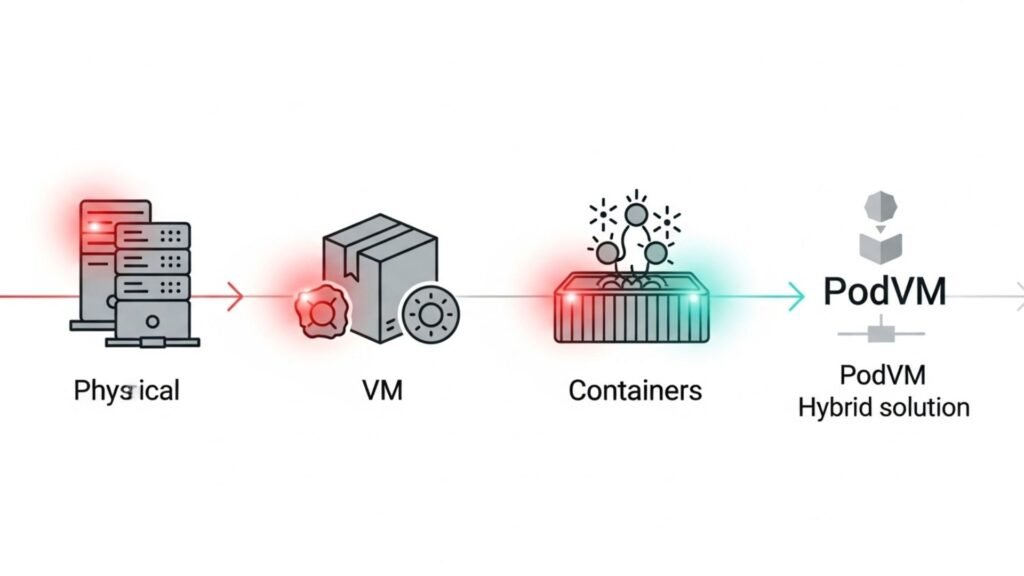
Virtualization has come a long way, and understanding this evolution is crucial to understanding PodVM. Initially, we relied on physical servers to run applications, but as demands grew, virtualization technologies like VMs were introduced. VMs emulate physical hardware, allowing multiple isolated environments to run on a single server. While VMs provide excellent security isolation, they are often resource-intensive, requiring significant CPU and memory resources.
On the other hand, containers emerged as a more lightweight alternative. Containers are smaller, faster to start, and more efficient than VMs. However, they share the same host kernel, which means they offer less isolation. This trade-off can lead to vulnerabilities, especially in multi-tenant environments where different workloads might share the same physical hardware.
PodVM fills the gap by offering the isolation of a VM with the resource efficiency and agility of a container.
Limitations of Traditional VMs and Containers
Let’s explore the limitations of traditional VMs and containers.
- Virtual Machines (VMs):
- Resource Overhead: VMs come with heavy resource overhead, including CPU, memory, and storage. Each VM requires its own guest operating system, which consumes a significant amount of resources.
- Slow Startup Times: VMs can take several seconds to boot up because they need to load a full OS and kernel, which is not ideal in a dynamic, cloud-native environment.
- Resource Overhead: VMs come with heavy resource overhead, including CPU, memory, and storage. Each VM requires its own guest operating system, which consumes a significant amount of resources.
- Containers:
- Lack of Strong Isolation: Containers share the same host OS kernel, which makes them lightweight but also vulnerable to security breaches. A flaw in the host kernel could potentially compromise multiple containers.
- Security Concerns: Containers often run with root privileges, which can be risky in multi-tenant environments.
- Lack of Strong Isolation: Containers share the same host OS kernel, which makes them lightweight but also vulnerable to security breaches. A flaw in the host kernel could potentially compromise multiple containers.
PodVM provides a solution to these challenges by offering VM-level isolation with the speed and efficiency of containers.
The Need for Lightweight and Secure Alternatives
With the rise of microservices and cloud-native applications, the demand for solutions that are lightweight, secure, and scalable has never been greater. PodVM addresses these needs by providing a virtualized environment that combines VM security with container efficiency. This makes it an ideal solution for workloads that require strong security isolation without compromising on performance.
What is a PodVM?
Definition of PodVM
At its core, a PodVM is a Kubernetes Pod that runs inside a lightweight virtual machine instead of a traditional container. This approach allows organizations to run containerized workloads in an environment that provides VM-grade security, all while maintaining the agility and resource efficiency of containers.
Key Characteristics and Features
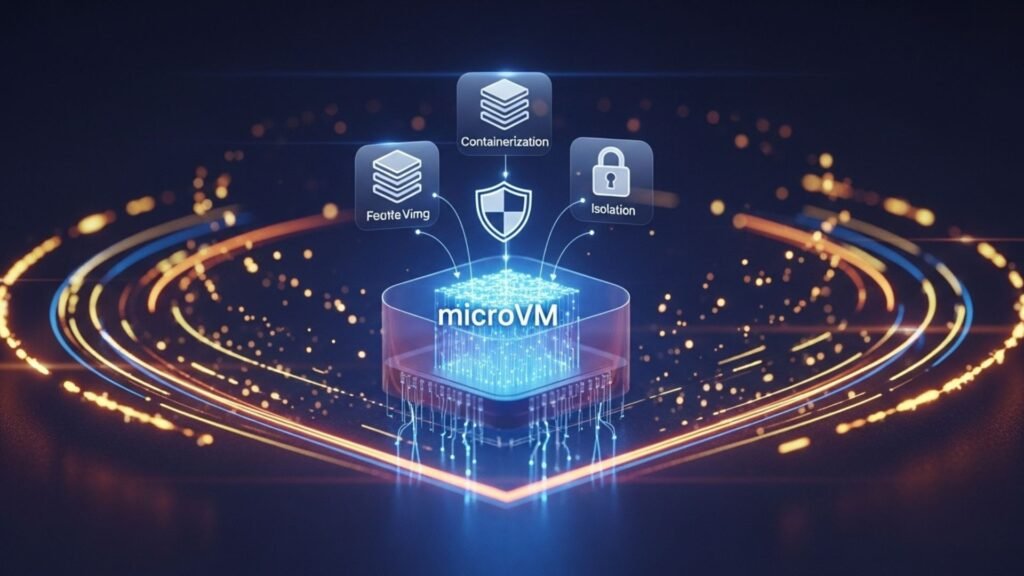
- Lightweight and Resource-efficient: PodVMs are much lighter than traditional VMs, meaning they consume fewer resources while still offering strong isolation.
- Strong Security and Isolation: By running a virtual machine within a Pod, PodVM offers strong security isolation—much like VMs, but without the associated overhead.
- Fast Startup Times: Unlike traditional VMs, PodVMs have fast startup times, thanks to the lightweight nature of the underlying microVM.
- Compatibility with Containerized Environments: PodVMs are designed to work seamlessly with Kubernetes and other containerized environments, making them a great fit for modern cloud-native applications.
Differences Between PodVM, Traditional VMs, and Containers
PodVM differs from both traditional VMs and containers in several ways:
- Isolation: While containers share the host kernel, PodVMs run in a microVM, offering VM-level isolation without the resource overhead of a traditional VM.
- Resource Efficiency: PodVMs are much lighter than traditional VMs, meaning they consume fewer resources and can scale faster.
- Security: PodVMs provide strong security by isolating workloads in a VM-like environment while still offering the flexibility and speed of containers.
How PodVM Works
Architecture Overview
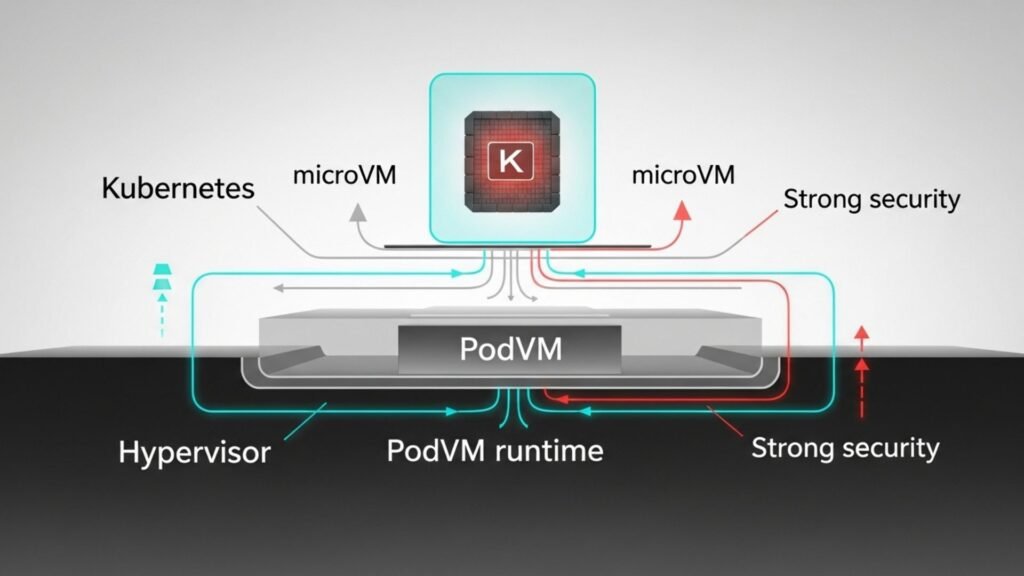
The architecture of PodVM can be broken down into the following layers:
- Hypervisor Layer: This layer provides the underlying virtualization support, enabling the microVM to run.
- PodVM Runtime Layer: This layer handles the lifecycle and execution of PodVMs, ensuring that the PodVM runs efficiently with minimal resource overhead.
Lifecycle of a PodVM
- Creation: PodVMs are created with minimal resource overhead, thanks to the use of a lightweight virtual machine.
- Scheduling: Kubernetes Scheduler schedules PodVMs onto appropriate nodes based on available resources.
- Execution: Once scheduled, the PodVM runtime spins up the microVM, and the containers within the Pod are executed.
- Termination: PodVMs can be gracefully terminated without consuming significant resources.
Networking and Storage in PodVMs
PodVMs integrate with existing network and storage systems. They use container-like networking features, such as Kubernetes network (CNI), while maintaining the isolation and security provided by virtual machines.
Security Mechanisms and Isolation
The key to PodVM’s security lies in the virtual machine layer. The microVM provides hardware-enforced boundaries that separate workloads from other containers and the underlying host kernel, ensuring robust security for multi-tenant environments.
Advantages of PodVM
Lightweight and Efficient Resource Usage
One of the biggest advantages of PodVM is its ability to run multiple workloads on the same hardware without consuming the excessive resources required by traditional VMs. This efficiency makes it ideal for dynamic cloud-native applications that require fast scaling and resource management.
Stronger Security Isolation
PodVM offers strong isolation compared to containers. In multi-tenant environments, PodVMs ensure that workloads are secure from one another, making it suitable for workloads with sensitive data or strict regulatory compliance requirements.
Faster Startup and Scaling
Thanks to the use of microVMs, PodVMs can start up faster than traditional VMs. This makes them ideal for serverless workloads, CI/CD pipelines, and other use cases that require rapid scaling.
Compatibility with Containerized Environments
PodVMs are fully compatible with Kubernetes, making it easy to integrate them into existing containerized environments without major changes to the overall infrastructure.
Use Cases and Applications
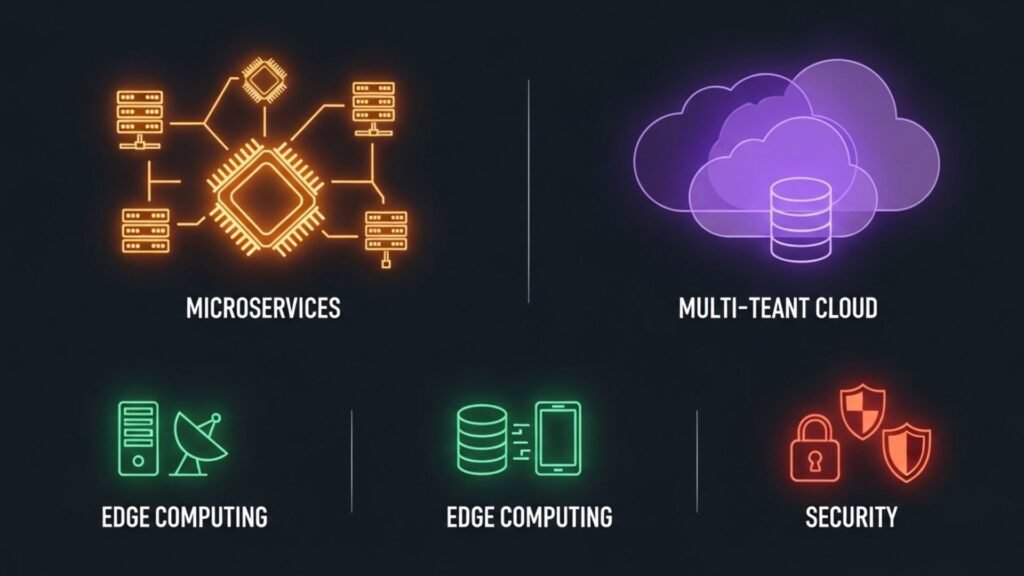
Microservices Deployment
PodVMs are particularly well-suited for microservices architectures, where each service requires strong security and isolation while remaining lightweight and scalable.
Multi-Tenant Cloud Environments
In cloud platforms and multi-tenant environments, PodVMs provide the isolation needed to keep workloads secure from one another without sacrificing resource efficiency.
Edge Computing Scenarios
PodVMs are ideal for edge computing applications, where low latency and resource efficiency are critical. By running containerized workloads inside a microVM, PodVM ensures optimal performance in resource-constrained environments.
DevOps and CI/CD Pipelines
PodVMs enable fast and efficient development cycles, making them an excellent choice for DevOps teams working with continuous integration and delivery pipelines.
Challenges and Considerations
Resource Management Complexities
While PodVMs are lightweight, managing resource allocation between multiple PodVMs can be complex, especially in large-scale environments. Proper resource management strategies are essential for optimal performance.
Compatibility and Ecosystem Maturity
As a relatively new technology, PodVM is still evolving, and some tools and platforms may not yet be fully compatible. However, as more organizations adopt cloud-native computing, support for PodVM will continue to grow.
Performance Trade-offs
In certain scenarios, there may be performance trade-offs when using PodVMs compared to pure containers or VMs. For instance, while microVMs are faster than traditional VMs, they may still introduce slight overhead compared to containers.
Monitoring and Troubleshooting
Monitoring PodVMs requires specialized tools that can track both VM and container metrics. Proper monitoring and troubleshooting practices are essential to ensure optimal performance.
The Future of PodVM Technology
Industry Adoption Trends
PodVM is gaining traction in industries that require high security, fast scaling, and resource efficiency, such as cloud service providers and edge computing platforms.
Integration with Kubernetes and Cloud-Native Platforms
As Kubernetes continues to be the standard for container orchestration, PodVM will likely see increased adoption due to its compatibility with Kubernetes and other cloud-native platforms.
Potential Developments and Enhancements
Future enhancements to PodVM technology will likely focus on improving ecosystem compatibility, optimizing performance, and simplifying management.
Conclusion
PodVM is poised to revolutionize virtualization by providing a lightweight, secure alternative to traditional VMs and containers. Its ability to combine the best of both worlds—the security of VMs and the efficiency of containers—makes it a powerful tool for modern computing. For developers and IT teams working with cloud-native and microservices environments, integrating PodVM offers the potential for better resource efficiency, faster scaling, and enhanced security. As the technology matures, we can expect PodVM to become a cornerstone of future distributed applications.
Frequently Asked Questions:
1. What is the main benefit of using PodVM over traditional VMs or containers?
PodVM combines the security isolation of VMs with the lightweight and fast performance of containers, making it an ideal solution for cloud-native applications. It offers strong security without the resource overhead of traditional VMs and provides fast startup times that containers can’t achieve.
2. How does PodVM ensure better security than containers?
PodVM provides VM-level isolation by running a microVM within each Kubernetes Pod, ensuring that workloads are securely isolated from one another. This offers much stronger security than containers, which share the host OS kernel and are more susceptible to vulnerabilities.
3. Can PodVM work with existing Kubernetes deployments?
Yes, PodVM integrates seamlessly with Kubernetes, allowing it to run in existing Kubernetes environments. It uses the Kubernetes API to manage PodVMs, making it easy to adopt without major changes to your infrastructure.
4. What are the performance trade-offs when using PodVM?
While PodVMs are faster and more resource-efficient than traditional VMs, they may still have slightly higher overhead compared to pure containers due to the hypervisor layer. However, this trade-off is minimal compared to the added security and isolation benefits.
5. Is PodVM suitable for multi-tenant environments?
Yes, PodVM is an excellent choice for multi-tenant environments. Its strong security isolation ensures that different tenants’ workloads remain secure from each other, making it ideal for cloud platforms and applications that require strong data protection and compliance.